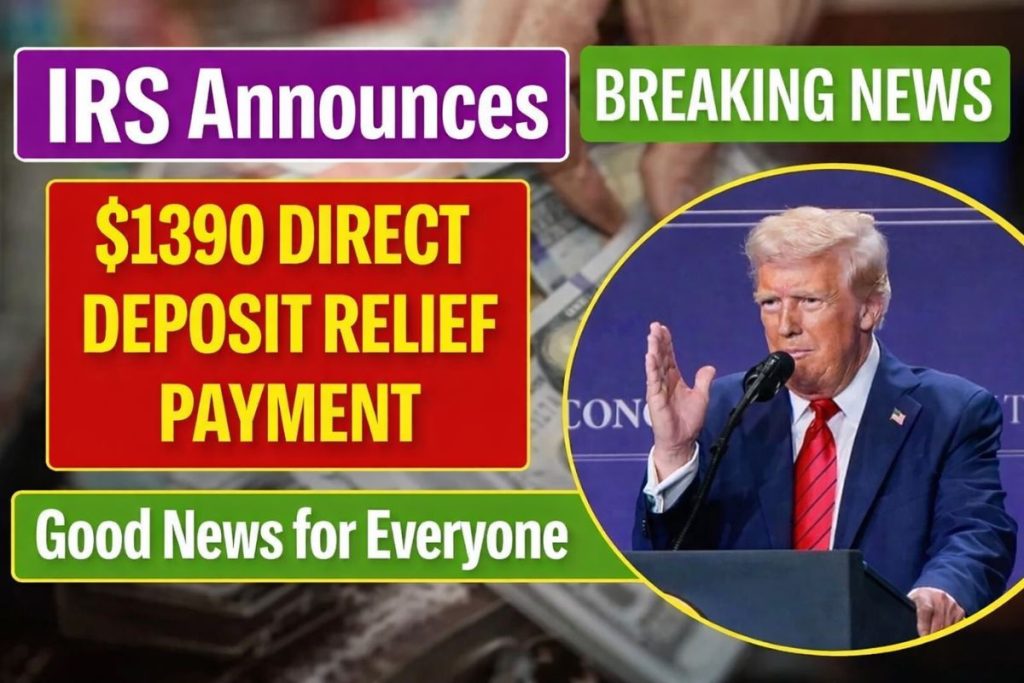
In December 2025, you may have seen headlines or social media posts talking about a $1,390 direct deposit relief payment. For many people, this has raised hope of extra financial support during an expensive end-of-year period. But before you plan around it, it’s important to understand what is officially confirmed, what is still being discussed, and what steps you should take to protect yourself from misinformation or scams.
This guide explains the situation in clear, practical language. You’ll learn what this payment is said to be, who might qualify if it is approved, how such payments are usually delivered, and how to verify information using official channels. You’ll also see where UK-based coverage sometimes overlaps with U.S. discussions—and why that distinction matters for you.
IRS Confirms $1,390 Direct Deposit Relief Payment
As of now, a $1,390 IRS direct deposit payment for December 2025 has not been universally confirmed through official government releases. Reports and online discussions may reference relief payments, but you should not assume eligibility or payment until confirmed by official sources such as the Internal Revenue Service or other U.S. government agencies.
That doesn’t mean assistance is impossible—it means you should rely on verified announcements, not headlines alone.
IRS Direct Deposit Relief Payment Key Highlights
| What You May Hear | What You Should Do |
| $1,390 relief payment discussed | Wait for official confirmation |
| Direct deposit mentioned | Verify bank details in official portals |
| December timing rumors | Follow government announcements only |
| Eligibility assumptions | Check official eligibility tools |
| Online claims spreading | Avoid sharing personal information |
| Official Website | https://www.irs.gov/ |
Why IRS Direct Deposit Payment Is in the News
Relief payments usually surface in public discussion when:
- Inflation or cost-of-living pressures increase
- Governments consider one-time financial support
- Budget proposals or policy drafts are reported before final approval
The $1,390 figure has appeared in discussions as a possible one-time relief amount, but amounts, eligibility, and timing can change or be withdrawn entirely before any official authorization.
This is why it’s essential to separate:
- Proposals and reporting
- From officially approved payments
What a Relief Payment Usually Means
A relief payment is typically:
- One-time (not monthly)
- Directly deposited if bank details are on file
- Issued automatically if you qualify
- Backed by legislation or executive authorization
If approved, payments are usually intended to help with:
- Food and grocery costs
- Utilities and rent
- Medical or emergency expenses
But again, none of this applies unless the payment is officially authorized.
IRS Direct Deposit Relief Payment Eligibility
If a relief payment like this were approved, eligibility would likely depend on:
- Your tax filing status (did you file recent returns?)
- Your income level
- Your residency or citizenship status
- Whether the government has your current direct deposit details
You would typically qualify faster if:
- You filed taxes for 2024 or 2025
- Your bank information is up to date
- You receive benefits through linked government programs
Always confirm eligibility through official portals.
How the Payment Would Be Delivered
If approved, delivery would likely follow standard methods:
- Direct deposit to the bank account on file
- Paper checks for those without banking details
- Government debit cards in limited cases
Direct deposit is the fastest and most secure option. If your bank details are outdated, payments may be delayed.
December Timing: What to Expect (If Approved)
December is a high-volume period for payments and mail, so timing can vary.
If such a payment were issued:
- Deposits could arrive mid-to-late December
- Processing may differ by individual
- Paper checks would take longer due to holidays
You should only rely on official payment trackers or notices, not estimated dates shared online.
Steps You Should Take Right Now
Whether or not a payment is approved, these steps keep you prepared:
- Check your tax filing status
Make sure your recent returns are filed correctly. - Update bank details
Ensure your direct deposit information is accurate in official portals. - Monitor official announcements
Look for updates from government agencies, not social media. - Avoid scams
Government agencies will not ask for personal details via unsolicited calls, texts, or emails. - Keep documents ready
Save tax returns, notices, and account confirmations.
UK Coverage vs U.S. Reality: Why This Matters
You may see UK-based financial news discussing U.S. relief payments. While these reports can offer context, U.S. payments are governed solely by U.S. authorities.
If you live in the U.S.:
- Follow U.S. government guidance
- Treat UK coverage as secondary commentary
If you live in the UK:
- U.S. relief payments generally do not apply to you
- UK financial support follows separate systems and rules
Final Tips for a Stress-Free December
- Don’t plan expenses around unconfirmed payments
- Use official portals to verify any updates
- Set reminders to check announcements periodically
- Stick to simple budgeting in case timelines shift
Being cautious now protects you from disappointment and fraud later.
Discussions about a $1,390 direct deposit relief payment in December 2025 have attracted attention, but confirmation must come from official sources before you rely on it. By staying informed, keeping your records up to date, and avoiding unverified claims, you put yourself in the best position to act quickly if and when a payment is approved.
FAQ’s
Is the $1,390 direct deposit payment officially approved?
Not yet. You should wait for confirmation from official government sources before expecting any payment.
Who would likely qualify if it is approved?
Eligibility would likely depend on tax filing status, income limits, and updated banking information.
How can I protect myself from scams?
Only trust messages from official government websites or domains. Never share personal details through unsolicited calls or texts.